Home → / Wine Regions → / North America / United States / Arizona → / Sonoita & Elgin
Arizona · Places, people & the work of growing wine
Sonoita & Elgin
Arizona’s southern grasslands hold a story of research, family vineyards and wines that reward a closer look—from familiar reds to unexpected whites.
Find your bearings.

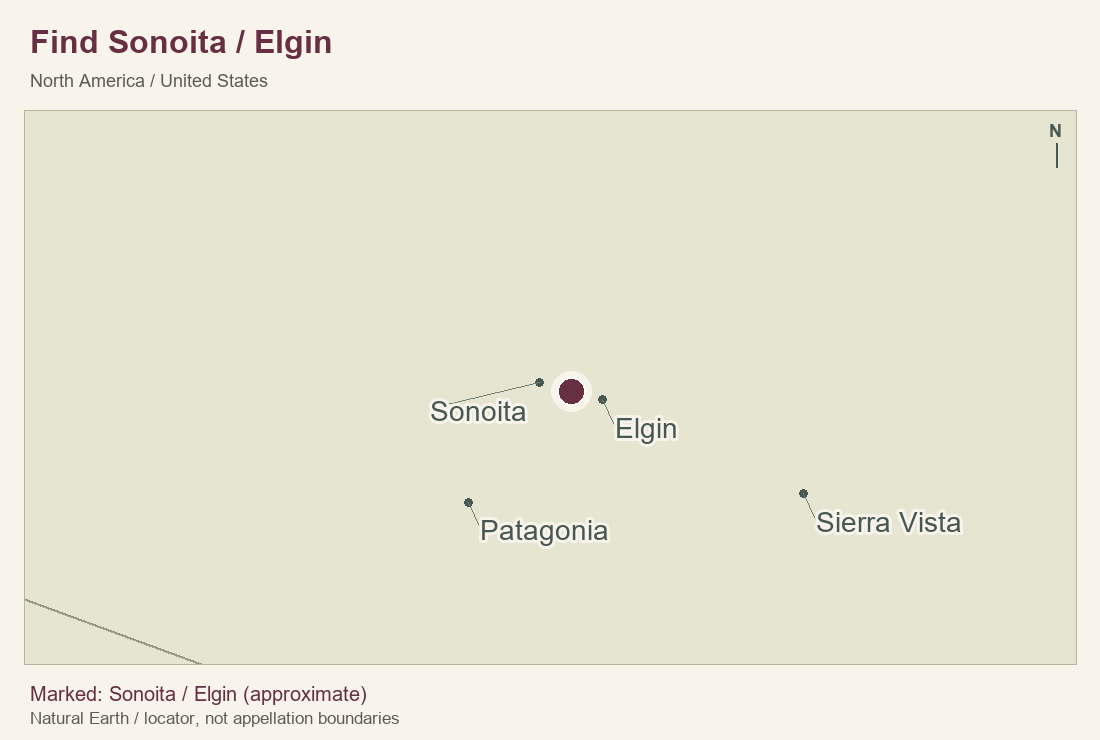

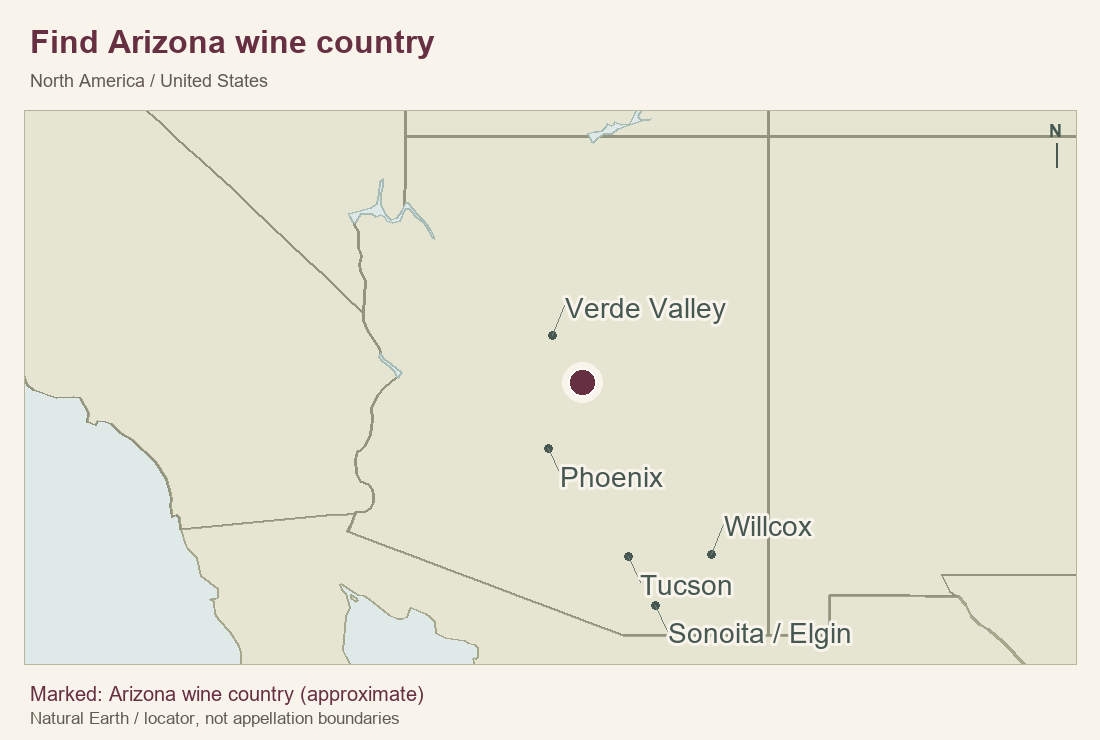
Grasslands, mountains and a pioneering question.
South of Tucson, the Sonoita and Elgin landscape offers open grasslands and mountain horizons. The Sonoita AVA is Arizona’s earliest federally recognized wine origin, appearing in TTB’s establishment list in 1984. Elgin is a neighbouring community within the region’s wine story, not a second AVA called Sonoita–Elgin.
Soil scientist Gordon Dutt and Blake Brophy’s experimental vineyard work in the early 1970s helped test Arizona’s winegrowing potential. The research became part of the foundation for the modern industry. This is a story of observing a site and trying it, then learning from the vines.
Meet the region through its growers.
Gordon Dutt & Sonoita Vineyards
The winery’s history recounts the 1973 experimental planting with Blake Brophy. Its present vineyard account lists both red and white varieties, including Sangiovese, Cabernet Sauvignon and Sauvignon Blanc. Read the history.
Kent Callaghan & family
Callaghan’s own story records Kent, Harold and Karen planting Buena Suerte Vineyard in 1990. Family work and an interest in European wines provide another route into this southern landscape. Meet the Callaghan story.
Dos Cabezas · compare two sites
Pronghorn in Sonoita and Cimarron in Cochise County give the same producer two distinct southern Arizona reference points. A winery name does not reduce all its fruit to one place. Explore its vineyards.
Read the season as well as the landscape.
The University of Arizona’s regional work compares the climate, soil and topography of Arizona’s winegrowing areas. Its seasonal newsletters show why a single hot-state stereotype is unhelpful: rain and temperature vary between regions and from year to year.
Summer monsoons bring water, but their timing matters around ripening. Elevation and exposure also belong in the vineyard discussion. Ask the grower what challenged this vintage and what changed at harvest.
Give the whites and blends room too.
Pronghorn’s published plantings include Picpoul Blanc, Roussanne and Viognier alongside red grapes such as Tempranillo, Mourvèdre and Graciano. A regional visit can therefore begin with an unfamiliar white as readily as a red blend.
Explore the ingredient, then the finished wine. Which varieties actually appear in that bottling, and what does the cellar contribute?
A pioneer’s question for your own tasting.
What made this site worth trying?
Choose a vineyard account from Sonoita or Elgin. Note elevation, grapes and one farming decision, then compare a wine’s production notes. What would you ask its grower about the site, and its maker about the blend?
Return to Arizona → Explore Willcox → Follow Oak Creek & the Verde River →
Meet the people behind these places.
Choose the story that catches your curiosity. Vineyard sources, cellar addresses and visitor locations are distinguished within each profile.
- Kent Callaghan · listening to an Elgin vineyard
- The Bostock family · Dos Cabezas & two vineyards
- Gordon Dutt & the next generation · from trials to Clarkdale
Follow an ingredient too: Viognier · Vermentino · Aglianico.
Behind this introduction.
Editorial sources checked 25 October 2026. Producer accounts are identified as such. Maps use public-domain Natural Earth data and approximate location markers; legal appellation boundaries are not shown.
- TTB: Sonoita establishment date
- Sonoita Vineyards: Gordon Dutt and Blake Brophy
- Sonoita Vineyards: vineyard varieties
- Callaghan: family planting account
- Dos Cabezas: vineyard varieties and locations
- University of Arizona: regional climate study
- University of Arizona: seasonal comparisons
- Natural Earth: map data