Home → / Wineries → / Arizona → / Eric Glomski & Page Springs Cellars
Arizona · People, vineyards & the wine they make
Eric Glomski & Page Springs Cellars
Oak Creek is part of the setting, but the story reaches beyond the creek bank. Follow Eric Glomski through vineyards, habitat and the decisions behind a blend.
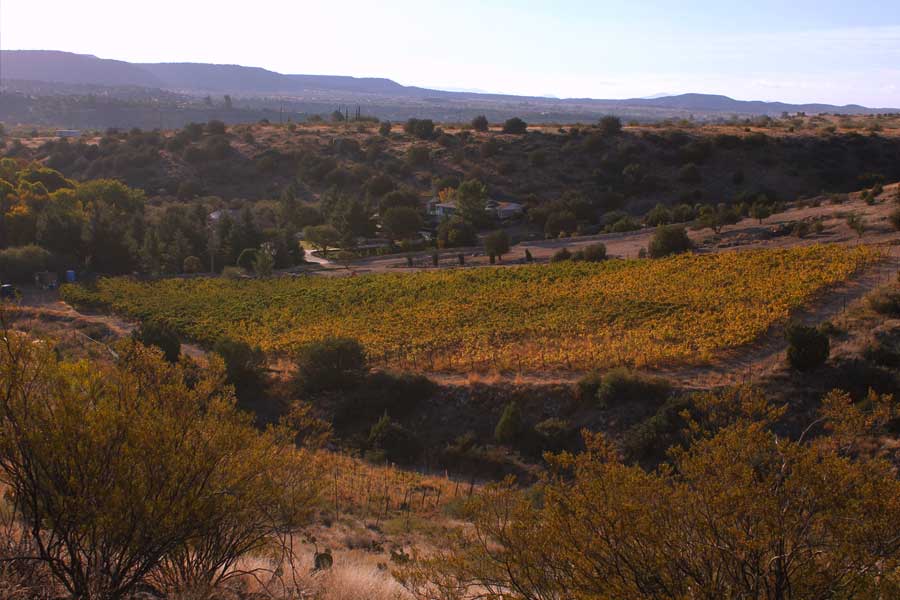
An ecologist’s questions become a winegrower’s work.
Arizona’s tourism office describes Eric Glomski’s earlier work as an ecologist and his interest in relationships between plants, soil and geology. Those interests make a natural route into a vineyard story: what grows here, what supports it, and what changes when people farm the land?
Page Springs’ account says Glomski and his family bought the home site in late 2003 and planted in spring 2004. Its location connects the wine story with Oak Creek and the Verde Valley →.
Follow the vineyard, not only the winery address.
| Follow this clue | What it tells us |
|---|---|
| Home Vineyard | The Page Springs home site introduces the creekside setting. |
| Dos Padres | Across Oak Creek and above the home vineyard, the producer describes blocks separated by native vegetation. |
| Colibri | A southern Arizona site in the Chiricahua Mountains adds another landscape within the same producer’s work. |
The producer’s account also dates the sale of its House Mountain share to 2024 and identifies 2025 as its last vintage from those grapes. An older wine may therefore tell a vineyard story that differs from the current estate arrangement.
Habitat belongs beside the vine rows.
Page Springs describes leaving native corridors between vineyard blocks so wildlife can reach water. Its broader farming account includes composting winery and food waste. These are specific reported practices, not a reason to assign an unverified certification.
A vineyard close to a creek raises useful questions about water and habitat. Ask how irrigation is supplied and managed; proximity alone cannot establish its source. The producer’s visitor guidance also governs access to Oak Creek through the estate.
One documented blend: 2024 Dark Star.
The producer’s Quarter 3 2025 release sheet records 2024 Dark Star as 73% Syrah, 24% Teroldego and 3% Viognier. This dated example shows a white grape appearing in a red blend and an Italian red variety alongside Syrah.
| Follow this clue | What it tells us |
|---|---|
| 73% Syrah | The largest component of this recorded release. |
| 24% Teroldego | A distinct red grape, not another name for Syrah. |
| 3% Viognier | A white grape. The composition alone does not establish whether the lots were co-fermented. |
Read the release sheet as evidence for that wine. The proportions are not a permanent recipe or a generic formula for Verde Valley reds.
A small Cork Dork discovery.
Let the maker’s account join your tasting.
Compare the vineyard source and grape composition of two Page Springs wines. Then read a farming account for one source site. Which details explain the landscape, which describe the cellar, and which are your own tasting observations?
Where shall we wander next?
Behind this introduction.
Editorial sources checked 25 October 2026. Historical events and individual wines are dated where relevant. Producer descriptions explain their own practice; they are not universal rules or independent rankings.